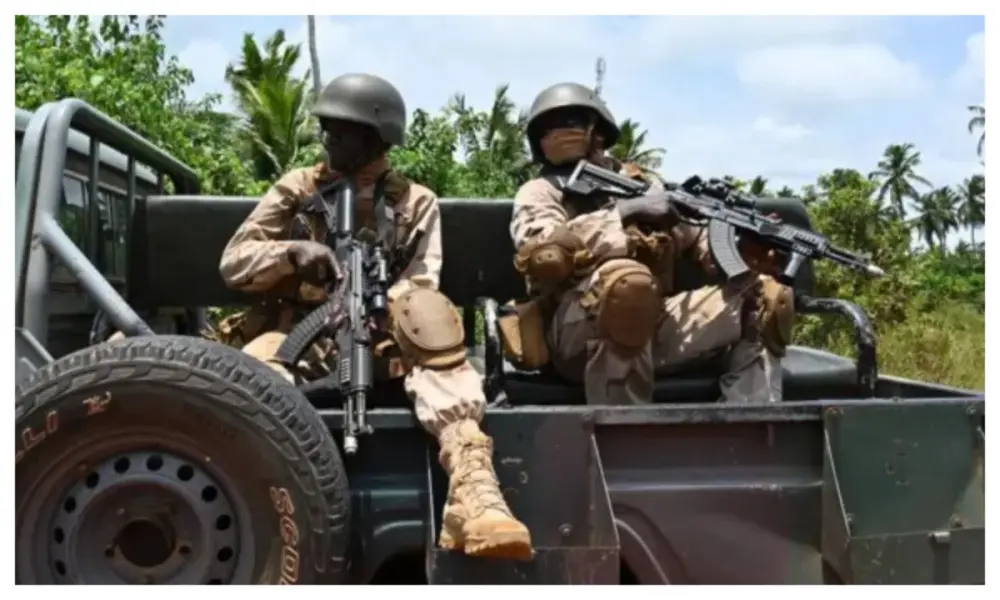
Two Nigerian nationals have been confirmed dead in the ongoing war between Ukraine and Russia, with Ukrainian authorities alleging that the men were fighting on the side of Russian forces.


Ukraine’s Defence Intelligence disclosed on Thursday that the bodies of the Nigerians were recovered in the Luhansk region.
The deceased were identified as Hamzat Kazeem Kolawole, 42, and Mbah Stephen Udoka, 38.
According to the agency, both men were enlisted in the 423rd Guards Motor Rifle Regiment, military unit 91701, under the 4th Guards Kantemirovskaya Tank Division of the Armed Forces of the Russian Federation.
The intelligence report stated that Kolawole signed a contract with the Russian Army on August 29, 2025, while Udoka reportedly enlisted on September 28, 2025. Udoka was said to have been deployed to the frontline on October 3, just days after signing his contract, despite allegedly having no prior military training.
The agency further claimed that no training records were found for Kolawole, suggesting he may also have been sent into combat without adequate preparation. Kolawole is survived by his wife and three children in Nigeria.
Ukrainian authorities alleged that both men were killed in late November during a drone strike while attempting to carry out an operation against Ukrainian positions in the Luhansk region.
In its statement, Ukraine’s Defence Intelligence warned foreign nationals against travelling to Russia or accepting employment offers within the country, cautioning that such trips could result in forced military deployment.
The development follows a recent report by CNN alleging that several Africans, including Nigerians, Ghanaians, Kenyans and Ugandans, were recruited into Russia under the guise of civilian employment, only to be compelled into military service upon arrival.
However, the Russian Ambassador to Nigeria, Andrey Podyelyshev, has denied allegations of deceptive recruitment and forced enlistment of foreign nationals, distancing the Kremlin from the claims.
As of the time of filing this report, the Nigerian government had yet to issue an official statement on the matter.